From Scientific Diplomacy to Creative Industries: Paving the Way for Joint Cooperation Between Iran and Greece
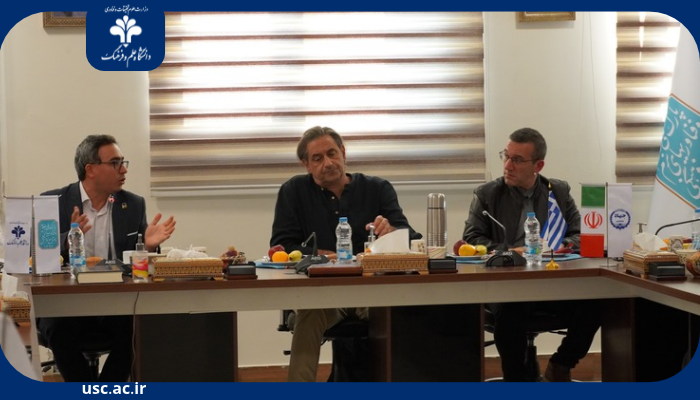
The visit of a Greek academic and research delegation to the University of Science and Culture and the National Park of Soft Sciences and Cultural Industries provided an opportunity to showcase Iran’s scientific and technological capabilities and explore avenues for cooperation in higher education, the cultural economy, and creative industries.
According to the Public Relations Office of the University of Science and Culture, strengthening academic ties and moving beyond conventional scientific exchanges toward joint initiatives in research, technology, and culture were the main objectives of the Greek delegation’s visit. The meeting brought together professors and researchers from both countries, along with representatives of the Academic Center for Education, Culture and Research (ACECR) and the Islamic Culture and Relations Organization.
The visit took place as the University of Science and Culture continues to expand its international academic network and strengthen its educational and research partnerships with universities and scientific institutions worldwide. The presence of the National Park of Soft Sciences and Cultural Industries alongside the University also offers new opportunities to extend international engagement beyond traditional academic frameworks into the fields of the cultural economy, innovation, and creative industries.
From Academic Capabilities to International Cooperation in Cultural Industries
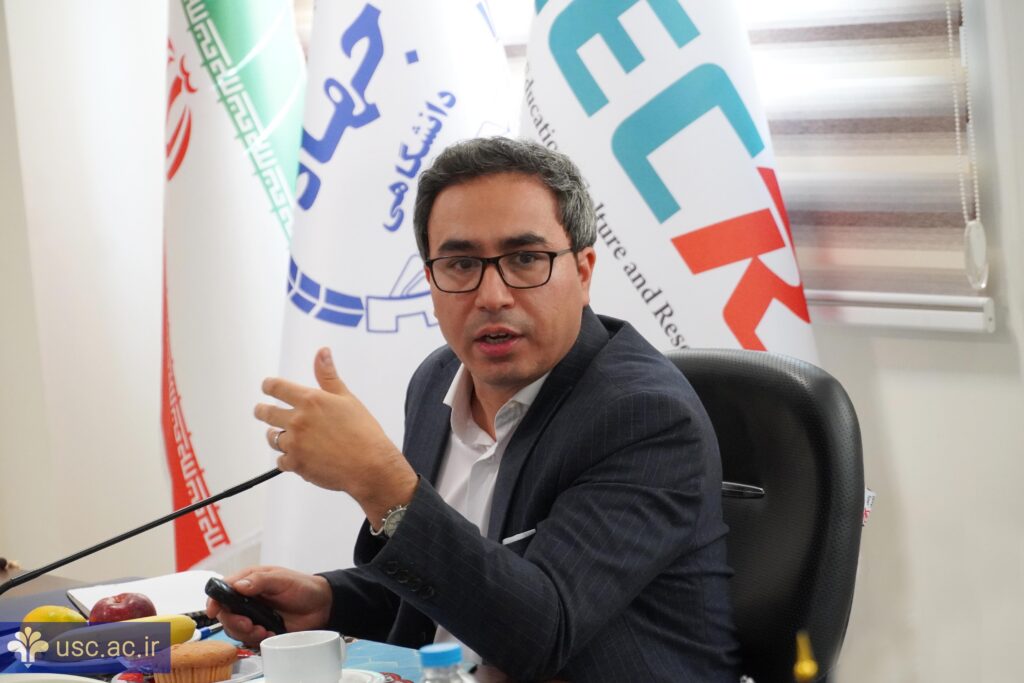
During the meeting, Dr. Ali Saadollah, Director of International Relations at the University of Science and Culture, introduced the University’s academic and research capabilities and emphasized its readiness to expand educational and scientific cooperation with Greek universities.
He noted that the University of Science and Culture, with more than 9,500 students, seven faculties, 120 academic staff members, and over 100 academic programs at different degree levels, offers a diverse range of educational and research opportunities in engineering, humanities, law, arts, architecture, tourism, and life sciences. The University is also home to more than 320 international students.
Referring to the University’s partnerships with more than 30 universities across 14 countries and the signing of 16 agreements under the Erasmus+ program between 2020 and 2023, Dr. Saadollah highlighted Greece’s academic standing as a valuable basis for expanding bilateral university relations. He also expressed the University’s readiness to facilitate student exchanges, implement joint research projects, and organize international conferences involving academics from both countries.
The University’s connections with specialized ACECR research centers, including the Royan Institute and Avicenna Research Institute, as well as its academic publications, SinaPress News Agency, and research and technological capabilities, were also highlighted during the presentation.
The National Park of Soft Sciences and Cultural Industries, one of ACECR’s specialized and strategic initiatives, also provided an opportunity to introduce Iran’s capabilities in the cultural and creative industries. Dr. Mahdieh Shahrabi Farahani, Director of International Relations at the Park, outlined its activities and capabilities and presented opportunities for international cooperation.
The Park’s participation in this international engagement is particularly significant in connecting academic and research capacities with the broader ecosystem of creative businesses and cultural industries. This provides opportunities to expand joint initiatives into areas such as the cultural economy, innovation, soft technologies, and the international development of cultural activities.
Eng. Mahmoud Pourbafrani, Director General of International Affairs at ACECR, also introduced the organization’s capabilities and outlined its potential for expanding scientific and international cooperation.
Greece: A Platform for Joint Academic and Research Initiatives
One of the key topics discussed during the meeting was how to translate academic relations into practical and implementable joint programs. Student exchange, collaborative research projects, cooperation in management and economics, international conferences, and the development of professional training programs were among the areas explored by both sides.
The participants also discussed the possibility of facilitating academic relations through the Greek Embassy and pursuing the signing of cooperation agreements with Greek universities. In this regard, the potential membership of the University of Science and Culture in the Black Sea Universities Network (BSUN) was also considered. The network could provide a platform for expanding academic connections and strengthening the University’s participation in regional scientific cooperation.
The Greek delegation included Zarotiadis, Professor at Aristotle University of Thessaloniki and a member of the Board of the Faculty of Social and Economic Sciences; Professor Grinogoris, Dean of the Faculty of Economic and Political Sciences at the same university; Lekasis, a Greek analyst and researcher; Ventis, Professor at Aristotle University of Thessaloniki and a researcher in Iranian and Islamic Studies; and Dr. Panos Kourgiotis, an academic researcher and lecturer specializing in political science, Middle Eastern studies, and contemporary Islam.
Academic Dialogue on the Representation of Iran in the Contemporary World
Alongside discussions on university cooperation, part of the program was dedicated to presenting the perspectives and research of University of Science and Culture faculty members on how Iran is represented internationally.
In this section, Dr. Fouad Najm al-Din examined the representation of contemporary Iranian art and the role of curatorial approaches in presenting Iranian culture, exploring how perceptions of Iran’s art and cultural identity are shaped in the international arena.
Dr. Fatemeh Ghanad discussed the role of social media and online representations in reproducing cultural stereotypes and shaping intercultural perceptions. Dr. Hooman Zandizadeh, in a presentation entitled “Iranian Resistance at the University and Beyond,” explored the social and cultural dimensions of this concept.
These discussions, together with the presentations of the University’s and the Park’s capabilities, provided the Greek delegation with an opportunity to become acquainted with some of the University of Science and Culture’s research perspectives and academic work in the fields of culture, art, and Iranian social issues.
The delegation subsequently visited several sections of the University of Science and Culture and the National Park of Soft Sciences and Cultural Industries, gaining further insight into their academic, research, and technological capacities.
The visit of the Greek academic delegation represents an opportunity to broaden the scope of the University of Science and Culture’s international engagement. With the participation of both the University and the National Park of Soft Sciences and Cultural Industries, this engagement also creates opportunities to connect scientific diplomacy, cultural diplomacy, and technological cooperation.
The next important step will be to follow up on the areas of cooperation discussed and translate the initial dialogue into practical joint academic, research, and cultural initiatives.